 EN
EN

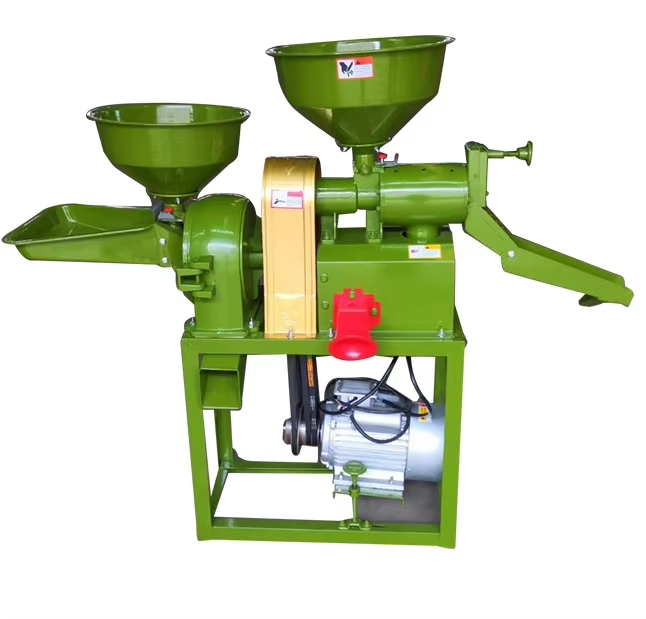
Rice production remains one of the most critical agricultural activities worldwide, feeding billions of people and supporting countless farming communities. Modern rice processing requires precision equipment to achieve optimal quality standards and maximize yields. The rice winnower represents a transformative solution for farmers seeking to improve their grain processing efficiency while maintaining superior product quality. This advanced agricultural machinery addresses fundamental challenges in rice cleaning and separation processes that have traditionally limited productivity and profit margins.

Understanding the critical role of post-harvest processing in rice production helps farmers make informed decisions about equipment investments. The integration of specialized cleaning equipment like a rice winnower can significantly impact both immediate processing results and long-term agricultural sustainability. Advanced winnowing technology provides farmers with the tools necessary to compete effectively in today's demanding agricultural marketplace while ensuring consistent product quality across all production cycles.
Understanding Rice Winnowing Technology
Fundamental Principles of Rice Separation
Rice winnowing operates on the principle of density and aerodynamic separation, utilizing controlled airflow to distinguish between rice grains and unwanted materials. The rice winnower employs sophisticated fan systems and adjustable air pressure controls to create optimal separation conditions for different grain varieties. This technology ensures that heavier rice grains settle while lighter chaff, dust, and debris are effectively removed through the winnowing chamber.
Modern winnowing systems incorporate multiple separation stages, allowing operators to achieve increasingly refined cleaning results through sequential processing cycles. The rice winnower design includes precision-engineered screens and air distribution channels that maximize separation efficiency while minimizing grain damage. Advanced models feature variable speed controls and adjustable air pressure settings, enabling operators to customize processing parameters based on specific grain characteristics and moisture content levels.
Advanced Features in Contemporary Winnowing Systems
Contemporary rice winnower designs integrate digital control systems that enable precise monitoring and adjustment of operational parameters throughout the cleaning process. These sophisticated machines include sensors that detect grain flow rates, moisture levels, and separation efficiency, providing real-time feedback to optimize performance. Automated adjustment mechanisms respond to changing conditions, ensuring consistent cleaning results regardless of variations in raw material quality or environmental factors.
Energy efficiency represents another significant advancement in modern winnowing technology, with manufacturers developing systems that minimize power consumption while maximizing processing capacity. The latest rice winnower models incorporate brushless motors, variable frequency drives, and optimized airflow designs that reduce operational costs significantly compared to traditional cleaning methods. These improvements make winnowing technology more accessible to small and medium-scale rice producers while maintaining the performance standards required for commercial operations.
Quality Enhancement Through Professional Winnowing
Removing Impurities and Foreign Materials
Professional-grade winnowing equipment excels at removing various types of contaminants that compromise rice quality and market value. A high-quality rice winnower effectively separates broken grains, immature kernels, stones, metal particles, and organic debris that manual cleaning methods often miss. This comprehensive cleaning process ensures that processed rice meets stringent quality standards required for premium market segments and international export requirements.
The precision cleaning capabilities of modern winnowing systems enable farmers to achieve consistent product grades that command higher prices in competitive markets. Advanced rice winnower technology can identify and remove subtle variations in grain density and surface characteristics, resulting in uniformly cleaned products that meet specific customer requirements. This level of quality control was previously achievable only through expensive manual sorting processes or multiple cleaning stages using different equipment types.
Preserving Grain Integrity During Processing
Gentle handling characteristics built into professional rice winnower designs protect grain integrity while achieving thorough cleaning results. Unlike aggressive cleaning methods that can crack or damage rice kernels, sophisticated winnowing systems utilize controlled air pressure and optimized grain flow patterns to minimize physical stress on individual grains. This careful processing approach preserves the natural appearance and structural integrity that consumers associate with premium rice products.
Temperature control features in advanced winnowing systems prevent heat buildup that could affect grain quality or nutritional content during extended processing sessions. Modern rice winnower designs incorporate cooling systems and heat dissipation mechanisms that maintain optimal processing temperatures regardless of ambient conditions or continuous operation requirements. These protective features ensure that processed rice retains its natural color, texture, and nutritional properties throughout the cleaning process.
Yield Optimization Strategies
Maximizing Recovery Rates
Efficient winnowing technology directly impacts yield optimization by maximizing the recovery of marketable rice grains from harvested crops. A properly calibrated rice winnower can achieve recovery rates exceeding ninety-five percent, significantly reducing waste and improving overall profitability for rice producers. Advanced separation algorithms and precision control systems ensure that valuable grains are not lost during the cleaning process while maintaining rigorous quality standards.
Strategic processing approaches using professional winnowing equipment enable farmers to extract maximum value from their harvests through selective separation techniques. Modern rice winnower systems can be programmed to create multiple product grades from a single batch of raw rice, allowing producers to target different market segments simultaneously. This capability transforms traditional all-or-nothing processing approaches into sophisticated value-added operations that optimize revenue potential across diverse customer bases.
Reducing Post-Processing Losses
Professional winnowing equipment significantly reduces post-processing losses that typically occur during storage, transportation, and further handling of cleaned rice. The rice winnower removes contaminants that could cause spoilage, pest infestation, or quality degradation during extended storage periods. Clean, uniformly processed rice maintains its quality characteristics longer and requires fewer additional treatments to preserve freshness and appearance.
Improved storage stability achieved through thorough winnowing translates directly into reduced financial losses from product deterioration and rejection. Rice that has been properly processed using professional winnowing equipment experiences lower rates of mold development, insect infestation, and rancidity during storage periods. These quality preservation benefits extend the marketable life of processed rice and provide producers with greater flexibility in timing sales to optimize market conditions.
Economic Impact and Return on Investment
Cost-Benefit Analysis of Winnowing Equipment
The financial impact of investing in professional rice winnower equipment extends beyond immediate processing improvements to encompass long-term operational efficiency gains. Initial equipment costs are typically recovered within two to three growing seasons through improved product quality, reduced waste, and enhanced market positioning. The rice winnower investment becomes increasingly attractive when considering the cumulative benefits of consistent quality improvement and reduced manual labor requirements over multiple harvest cycles.
Comparative analysis of winnowing equipment versus alternative cleaning methods reveals significant advantages in processing speed, consistency, and labor efficiency. Modern rice winnower systems can process substantially larger volumes than manual cleaning approaches while maintaining superior quality standards throughout extended operations. These efficiency gains translate into reduced per-unit processing costs and improved profit margins that justify the capital investment required for professional-grade winnowing equipment.
Market Premium Opportunities
Access to premium market segments becomes possible when rice producers utilize professional winnowing technology to achieve consistent quality standards demanded by discerning customers. The rice winnower enables producers to meet certification requirements for organic, export, and specialty rice markets that offer significantly higher prices than commodity-grade products. These premium opportunities can substantially increase revenue per acre and improve overall farm profitability.
Brand development and customer loyalty benefits emerge when farmers consistently deliver high-quality rice products made possible by professional winnowing equipment. Reliable quality standards achieved through sophisticated rice winnower technology enable producers to develop long-term relationships with premium buyers who value consistency and reliability. These established relationships provide market stability and pricing advantages that continue to benefit producers over many growing seasons.
Implementation Considerations for Rice Producers
Selecting Appropriate Winnowing Equipment
Choosing the right rice winnower requires careful evaluation of production volume, grain varieties, and specific quality requirements that define individual farming operations. Equipment sizing considerations must account for peak processing periods, storage capacity limitations, and seasonal workflow patterns that influence optimal processing schedules. Professional consultation with equipment specialists helps ensure that selected winnowing systems align with specific operational requirements and growth projections.
Technical specifications for winnowing equipment should address power requirements, throughput capacity, and maintenance needs that affect long-term operational efficiency. The ideal rice winnower configuration balances processing capability with energy efficiency, reliability, and ease of maintenance to minimize operational disruptions. Comprehensive evaluation of available options enables producers to select equipment that provides optimal performance characteristics for their specific applications and budget constraints.
Integration with Existing Processing Systems
Successful winnowing equipment implementation requires careful integration with existing grain handling and processing infrastructure to maximize efficiency gains. The rice winnower should complement other processing equipment and workflow patterns to create seamless operations that minimize handling requirements and processing time. Strategic placement and connectivity considerations ensure that winnowing operations enhance rather than complicate existing processing procedures.
Workflow optimization strategies help producers maximize the benefits of winnowing technology by coordinating processing sequences and material handling procedures. Effective integration of rice winnower operations with drying, storage, and packaging systems creates comprehensive processing solutions that improve overall efficiency and quality outcomes. These systematic approaches to equipment integration deliver superior results compared to isolated improvements in individual processing stages.
FAQ
What is the typical processing capacity of a commercial rice winnower?
Commercial rice winnower systems typically process between 1,000 to 5,000 kilograms of rice per hour, depending on the specific model and configuration selected. Processing capacity varies based on grain moisture content, initial cleanliness levels, and desired final quality standards. Larger industrial models can achieve significantly higher throughput rates for large-scale operations, while smaller units are designed for farm-level processing needs.
How does winnowing equipment affect rice nutritional content?
Professional winnowing equipment preserves rice nutritional content by using gentle cleaning processes that avoid heat generation or chemical treatments. The rice winnower removes only external contaminants and damaged grains while maintaining the natural nutritional profile of healthy rice kernels. This preservation of nutritional integrity makes winnowed rice particularly suitable for health-conscious consumers and specialty market segments.
What maintenance requirements are associated with rice winnowing equipment?
Regular maintenance for rice winnower equipment includes daily cleaning of processing chambers, weekly inspection of air filters and fan systems, and periodic calibration of separation controls. Most commercial models require professional servicing annually to ensure optimal performance and extend equipment lifespan. Proper maintenance practices significantly reduce operational disruptions and maintain consistent cleaning performance throughout the equipment's service life.
Can winnowing equipment handle different rice varieties effectively?
Modern rice winnower systems feature adjustable parameters that accommodate various rice varieties, grain sizes, and processing requirements effectively. Different rice types may require specific air pressure settings, screen configurations, or processing speeds to achieve optimal results. Professional winnowing equipment typically includes preset configurations for common rice varieties, making it easy for operators to switch between different grain types without extensive recalibration procedures.